
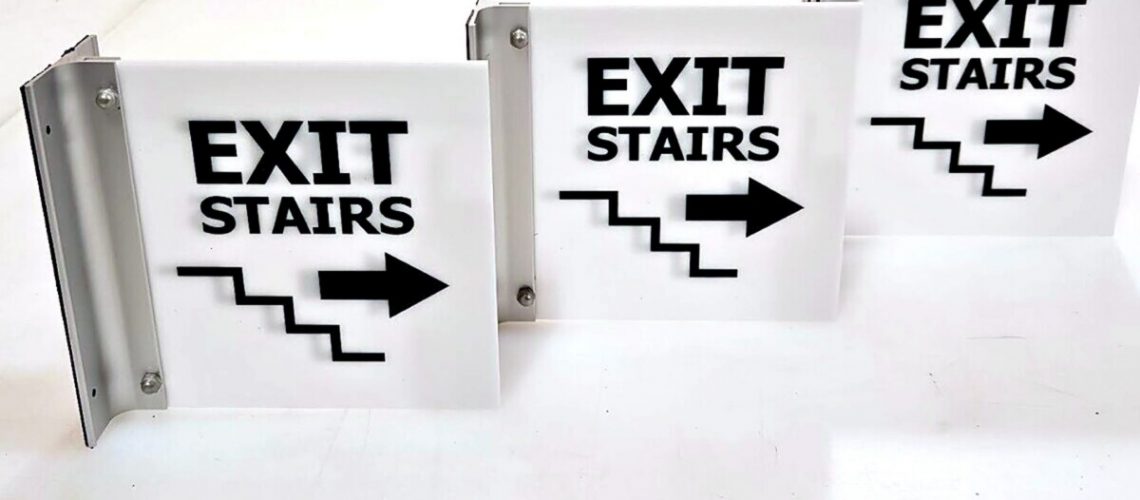
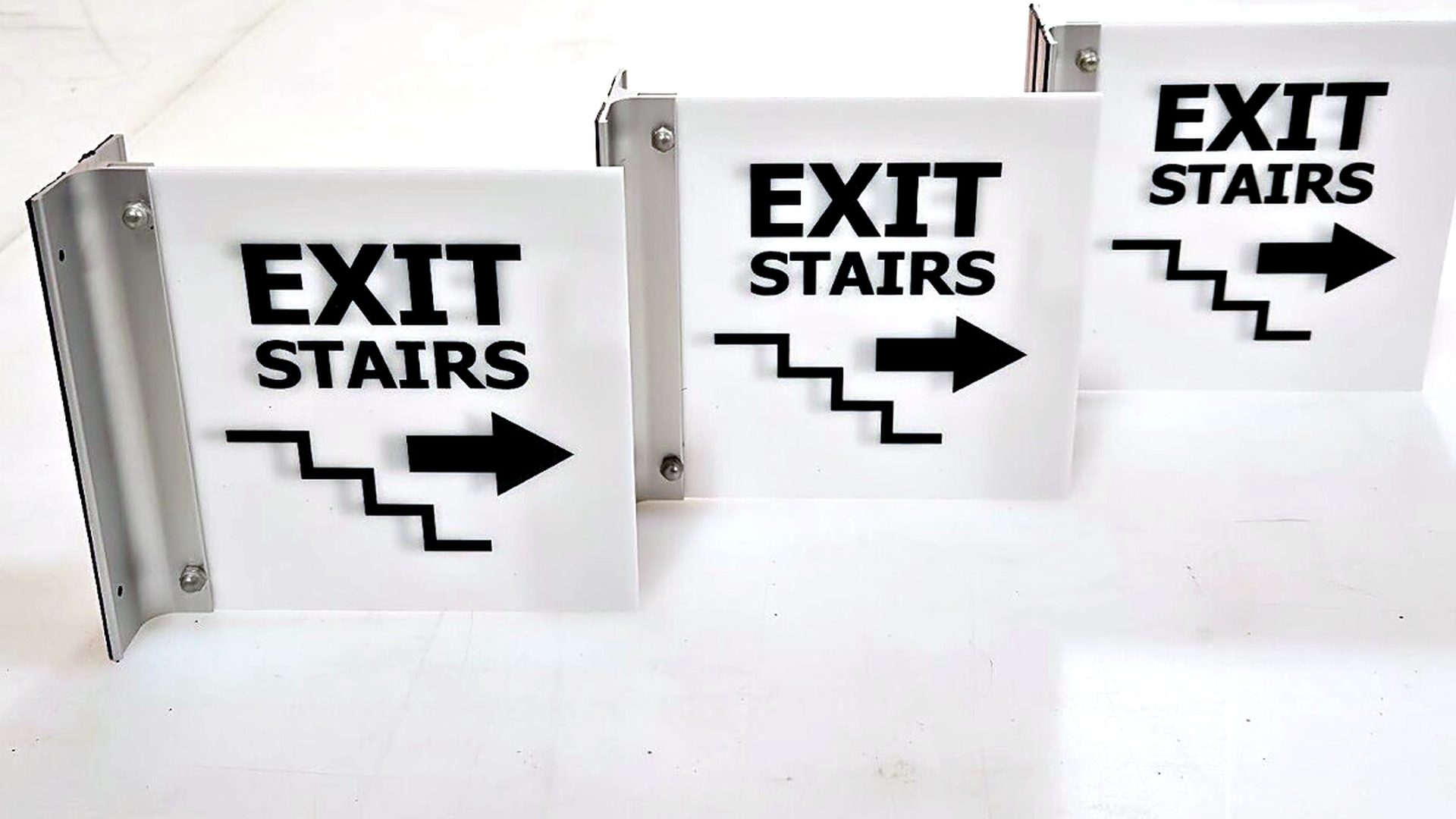
Wayfinding signs Raleigh NC businesses rely on do one simple job: they help people find where they are going without asking for help. Directional arrows, exit and stair signs, building directories and floor maps guide visitors, tenants and staff through your property, and they keep the space safe and easy to use. Mercury Signs designs, fabricates and installs wayfinding signage across Raleigh, Durham, Cary and Apex.
What Are Wayfinding Signs?
Wayfinding signs are the signs that move people through a building or property. They answer three questions in order: where am I, where do I need to go, and how do I get there. A good system uses the same fonts, colors, symbols and mounting heights everywhere, so a visitor learns the pattern in the first minute and follows it without thinking.
Common types of wayfinding signs include:
- Directional signs with arrows that point to restrooms, suites, elevators and exits.
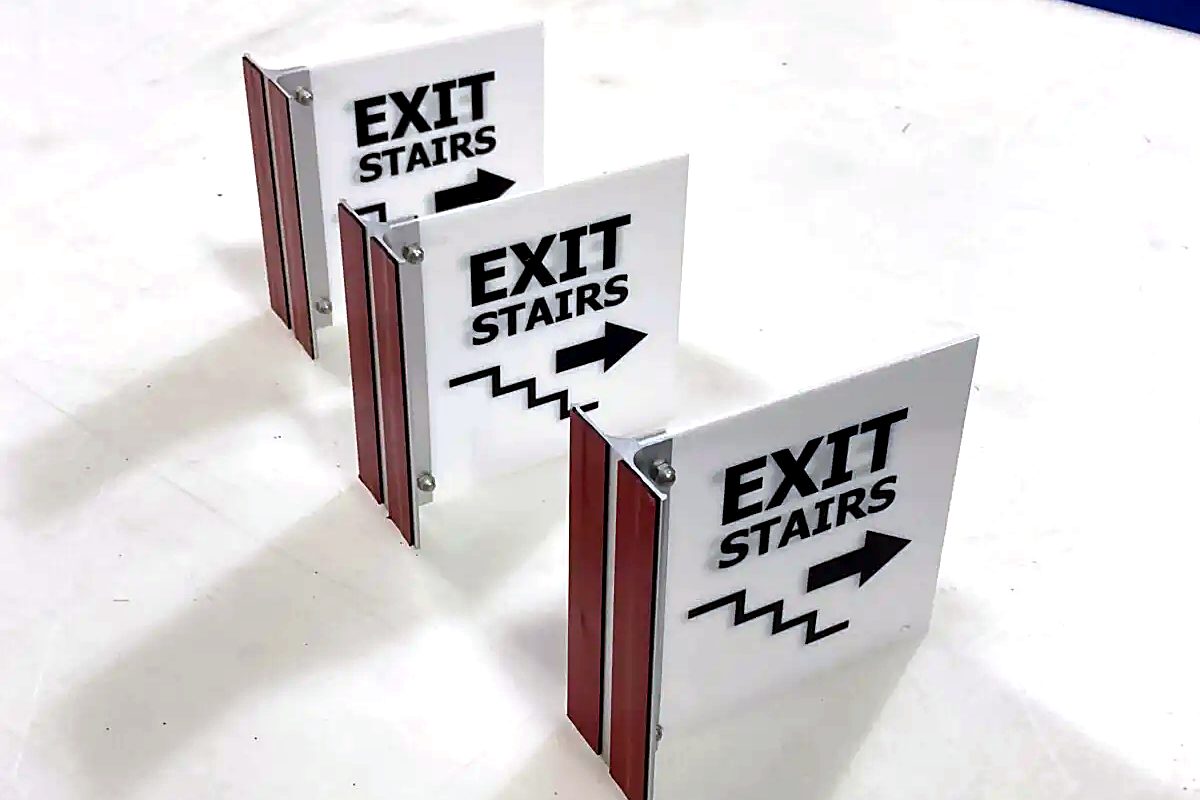
- Exit and stair signs that mark egress routes and help in an emergency.
- Building directories that list tenants, floors and suite numbers.
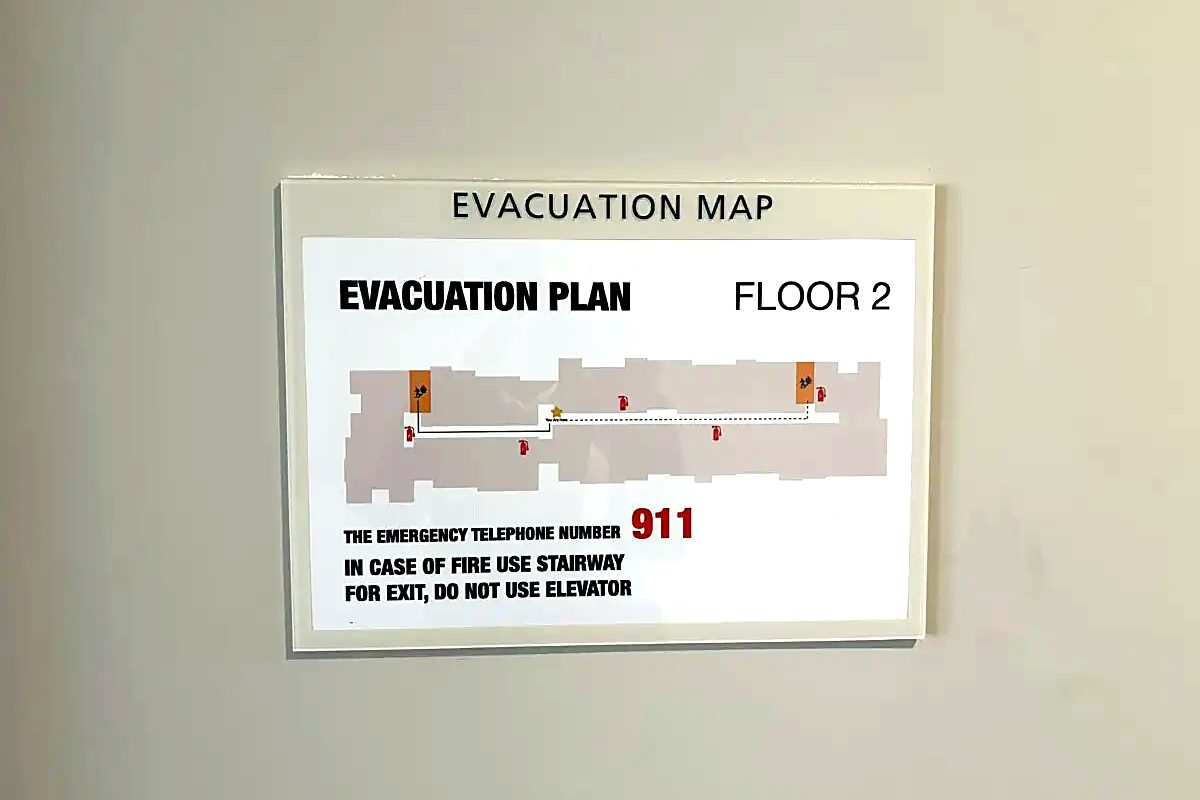
- Floor maps and evacuation plans that show the layout of each level.
- Parking and site signs that guide drivers from the street to the right entrance.
Wayfinding signs versus identification signs
Identification signs name a room or a business, such as a suite number or a lobby logo. Wayfinding signs lead people to those places. Most commercial properties need both, and they work best when they are planned together.
Why Raleigh Businesses Need a Wayfinding Plan
Raleigh and the Triangle are full of multi-tenant office parks, medical buildings, schools, apartment communities and retail centers. In these properties, first-time visitors are the norm. A clear wayfinding plan reduces missed appointments, cuts the number of “where is the restroom?” questions at your front desk and makes a busy property feel organized and professional.
Wayfinding also supports safety. Exit signs, stair signs and evacuation maps help people leave a building quickly, and many of them are tied to local fire and building code requirements. Always confirm the rules for your building with your local authority before you order, and review the 2010 ADA Standards for Accessible Design if your signs identify permanent rooms. Our guide to ADA signs for Raleigh businesses explains how those room signs fit into the bigger picture.
Questions to ask before you plan
- Who visits most often: customers, patients, residents or delivery drivers?
- Where do first-time visitors usually get lost or turn around?
- Which signs are required for code, and which are there for convenience?
- Will the property add tenants, suites or buildings in the next few years?
How a Wayfinding Sign Plan Works
A strong plan starts with a walk through the property. Follow the path a visitor takes from the parking lot to the final door and mark every spot where a decision is made: a fork in a hallway, a stairwell, an elevator lobby or a building entrance. Each of those spots needs a sign.
Choose clear, readable designs
Wayfinding signs must be read quickly and from a distance. Use high-contrast colors, simple fonts and universal symbols. Short words and bold arrows beat long phrases. Keep the placement consistent, so visitors know where to look next.
Pick materials that fit the space
Interior signs are often made from acrylic, aluminum or laminated panels with a clean finish. Outdoor signs need weather-resistant materials and coatings that hold up to Carolina sun and rain. Flag-mounted and projecting signs help in hallways, because people can see them from down the corridor.
Match your brand
Wayfinding does not need to look generic. If you also need building identification, see our commercial sign services for lobby, office and exterior signs that pair with your directional system. Your colors, fonts and finishes can carry through the whole system, so the signs feel like part of the building and reinforce your brand at the same time.
Wayfinding Sign Checklist for Your Property
Use this list to review what your property already has:
- Is there a sign at every major decision point?
- Are exit and stair signs visible from both directions?
- Does the building directory match the current tenants?
- Do directional arrows point the right way after any renovation?
- Are the signs lit, or easy to read, at night?
- Do your ADA room signs match the style of your directional signs?
Frequently Asked Questions
What is the difference between wayfinding signs and directional signs?
Directional signs are one kind of wayfinding sign. Wayfinding covers the whole system: directional arrows, directories, maps, exit signs and room identification, all working together to guide people through a space.
Do commercial buildings in Raleigh need exit and stair signs?
Many commercial buildings are required to mark exits and stairways for safety. Requirements depend on the building type and use, so check the local code and your inspector before you finalize a design.
How long does it take to make custom wayfinding signs?
Timing depends on the number of signs, the materials and the approvals needed. Smaller interior packages move faster than large multi-building projects. Share your move-in or opening date with your sign company early, so production and installation fit your schedule.
Can wayfinding signs match my brand colors?
Yes. Custom signs can use your brand colors, fonts and finishes while keeping the contrast and symbols that make them easy to read.
Plan Your Wayfinding Signs With Mercury Signs
Good wayfinding helps visitors feel confident from the parking lot to the front desk. Mercury Signs is a custom commercial sign company serving Raleigh, Durham, Chapel Hill, Cary, Morrisville and Apex. We handle design, fabrication, permitting and professional installation, so your project stays on schedule. Visit mercurysignsinc.com to request a quote for your wayfinding signs in Raleigh, NC.
